Abba Leffler
Senior Principal Scientist, Computational Chemistry, Pharmaceutical and Biotechnology industries
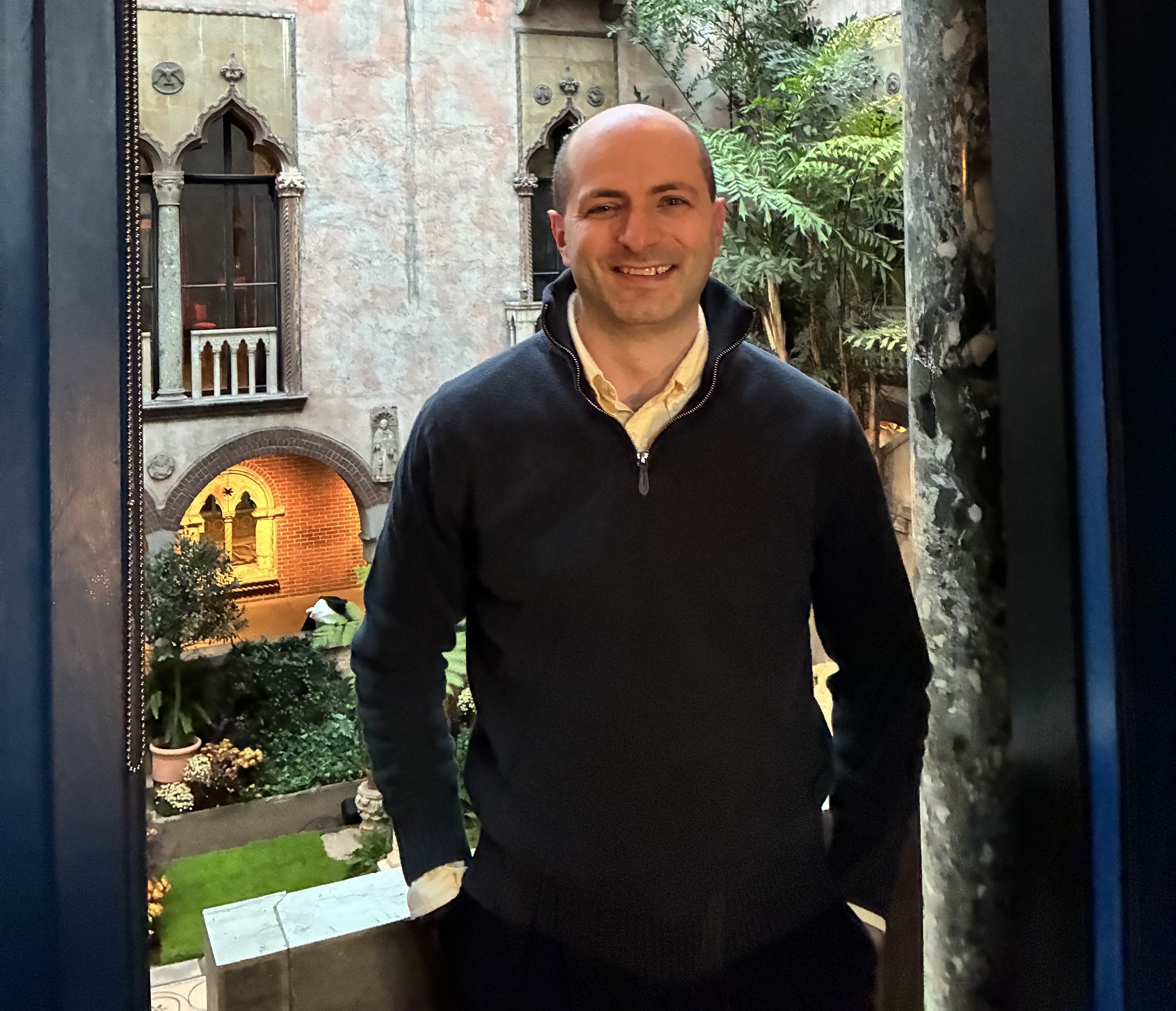
Abba E. Leffler, Ph.D., has dedicated his career to bridging the gap between computational modeling and medical discovery. As a Senior Principal Scientist in the therapeutics group at Schrödinger, he focuses on early-stage drug discovery, utilizing advanced computational tools to expedite the identification of potential treatments. Schrödinger’s innovative physics-based computational platform enables researchers in biotechnology, pharmaceuticals, and materials science to design and test molecules virtually, reducing the need for lengthy trial-and-error experimentation in the laboratory.
Dr. Leffler’s work combines chemistry, biology, and computational science to inform the development of new medicines. He specializes in using artificial intelligence and computational chemistry to predict how molecules will behave, allowing researchers to refine compounds before physical testing begins. By combining theoretical modeling with experimental validation, he plays a crucial role in translating computational insights into real-world therapeutic possibilities. During his nearly ten years at Schrödinger, he has contributed to projects that advance the company’s mission to improve the efficiency and accuracy of modern drug design.
His educational foundation reflects the same interdisciplinary balance that defines his work. Dr. Leffler earned his AB in Chemistry from Princeton University, where he also obtained a Certificate in Applied Mathematics. While at Princeton, he received the Robert Thornton McKay Prize for physical chemistry, recognizing his outstanding academic achievement. He later completed a Ph.D. in Neuroscience at the NYU School of Medicine, supported by a National Institutes of Health training grant. His background in chemistry, mathematics, and neuroscience provides a strong foundation for solving complex problems across various scientific disciplines.
Dr. Leffler’s research has been featured in many prestigious journals, including Science, The Journal of Medicinal Chemistry, The Journal of Neuroscience, ACS Medicinal Chemistry Letters, The Journal of Chemical Information and Modeling, and Proceedings of the National Academy of Sciences. One of his most notable publications, “Discovery of Highly Potent Noncovalent Inhibitors of SARS-CoV-2 Main Protease through Computer-Aided Drug Design,” was published in The Journal of Medicinal Chemistry. In this study, he and his collaborators employed advanced computational design methods to identify a molecule that blocks a key enzyme the coronavirus requires for replication. The compound, known as “compound 30,” showed potent antiviral activity in cells and promising safety and dosing results in animal studies. Their research demonstrated the potential of computational approaches to develop treatments that could remain effective against multiple variants, including omicron.
His other notable works include “Exploiting Solvent Exposed Salt-Bridge Interaction for the Discovery of Potent Inhibitors of SOS1 Using Free-Energy Perturbation Simulations,” “How Does a Small Molecule Bind at a Cryptic Binding Site?”, and “AutoDesigner, a De Novo Design Algorithm for Rapidly Exploring Large Chemical Space for Lead Optimization: Application to the Design and Synthesis of D-Amino Acid Oxidase Inhibitors.” In addition to his journal publications, Dr. Leffler has contributed chapters to scientific textbooks and frequently presents his research at conferences nationwide.
Dr. Leffler is also an inventor, listed on several patents, including one involving a compound now in clinical trials for the treatment of kidney cancer. Before completing his Ph.D., he worked at D.E. Shaw Research, a company recognized for combining supercomputing and molecular simulations to study biological systems at the atomic level. His experience there gave him valuable insight into how computational frameworks can guide biological research and accelerate drug discovery.
Outside his professional life, Dr. Leffler dedicates time to education, mentorship, and community involvement. He supports Princeton University as a member of the Leadership Board of the Scharf Family Chabad House, which provides programs and events that foster community engagement among students. For ten years, he has served as an alum interviewer for Princeton and volunteers on his co-op board. He has also spent over fifteen years delivering outreach talks to students at universities and high schools, helping inspire young people to pursue science. In recent years, he has become actively involved in local discussions about environmental conservation, with a focus on protecting trees and wildlife within his community.
When not working or volunteering, Abba Leffler enjoys running and is a member of a local running club. Last year, he celebrated his 15th college reunion at Princeton, reconnecting with fellow alumni and reflecting on his academic beginnings. His father, who has taught chemistry and computer science in New York City public schools for more than two decades, will retire at the end of the year, a moment that represents both personal pride and the continuation of a family legacy in science and education.
Computational Salt-Bridge Insights for SOS1 Inhibitors
Know More: LinkedIn
.jpeg)


